


Good morning, friends.
Early mornings have always been a time of reflection and inspiration for me. In my forties and fifties, I often woke up at 4:30 in the morning. I found it to be easy to focus without the myriad of distractions that dominated my life during office hours.
Since my Alzheimer’s diagnosis, I have no set sleep schedule, although I continue to be an early riser. I wake up early naturally, without the aid of an alarm. Most importantly, I have relaxed mornings as opposed to my stressful business life many years ago.
This morning is my typical routine. I woke up about six and decided to read the news on my phone before actually putting my feet on the floor. Big Bit was peacefully sleeping beside me. Bella was lying in a chair beside the bed - also, sound asleep.
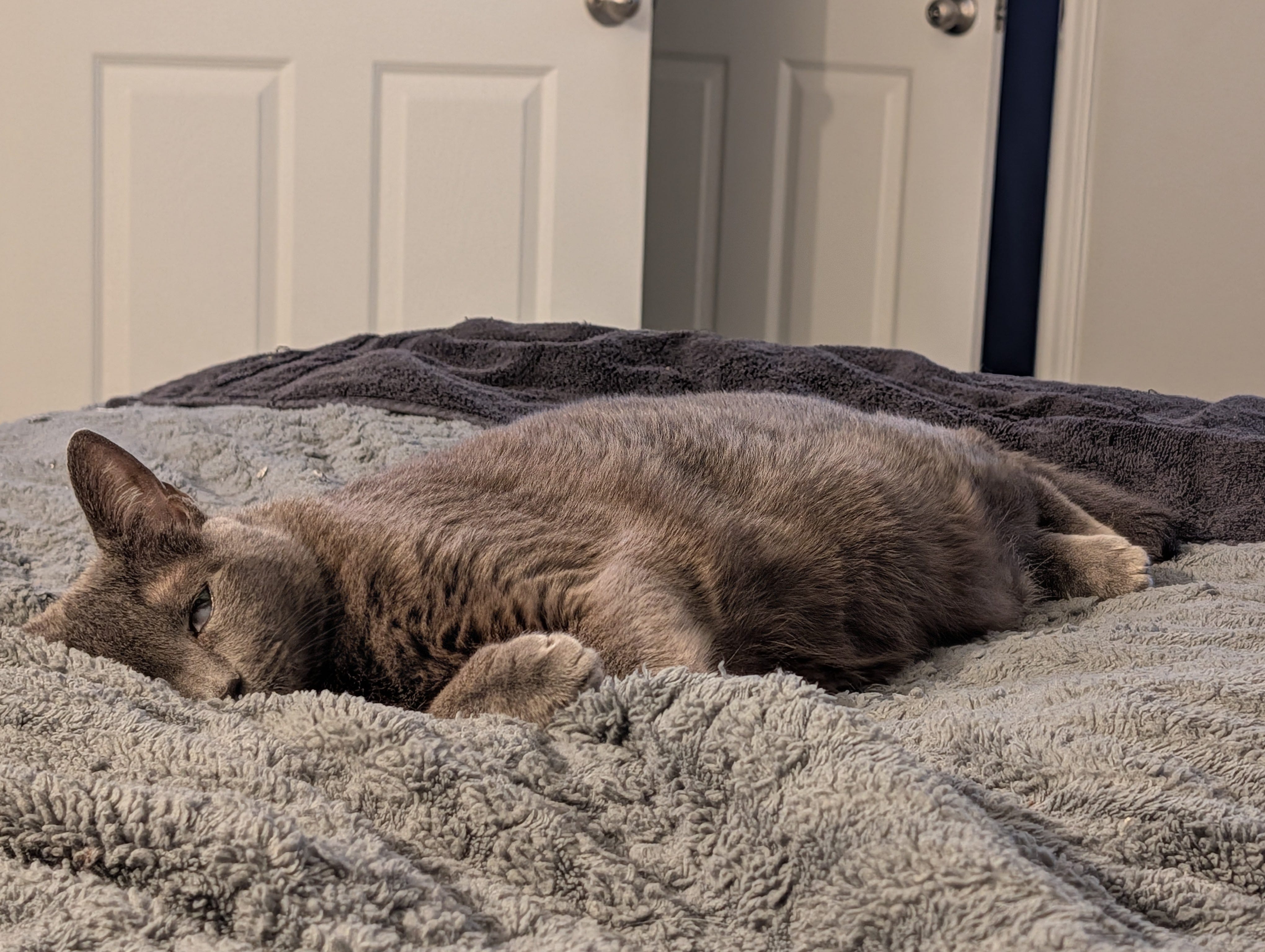
About 6:30, Big Bit wakes up and makes it apparent that she is hungry and wants me to feed her. Bella always wakes up when Big Bit does. It seems like there is a special feline communication channel that Big Bit uses to tell Bella it is time to wake up.
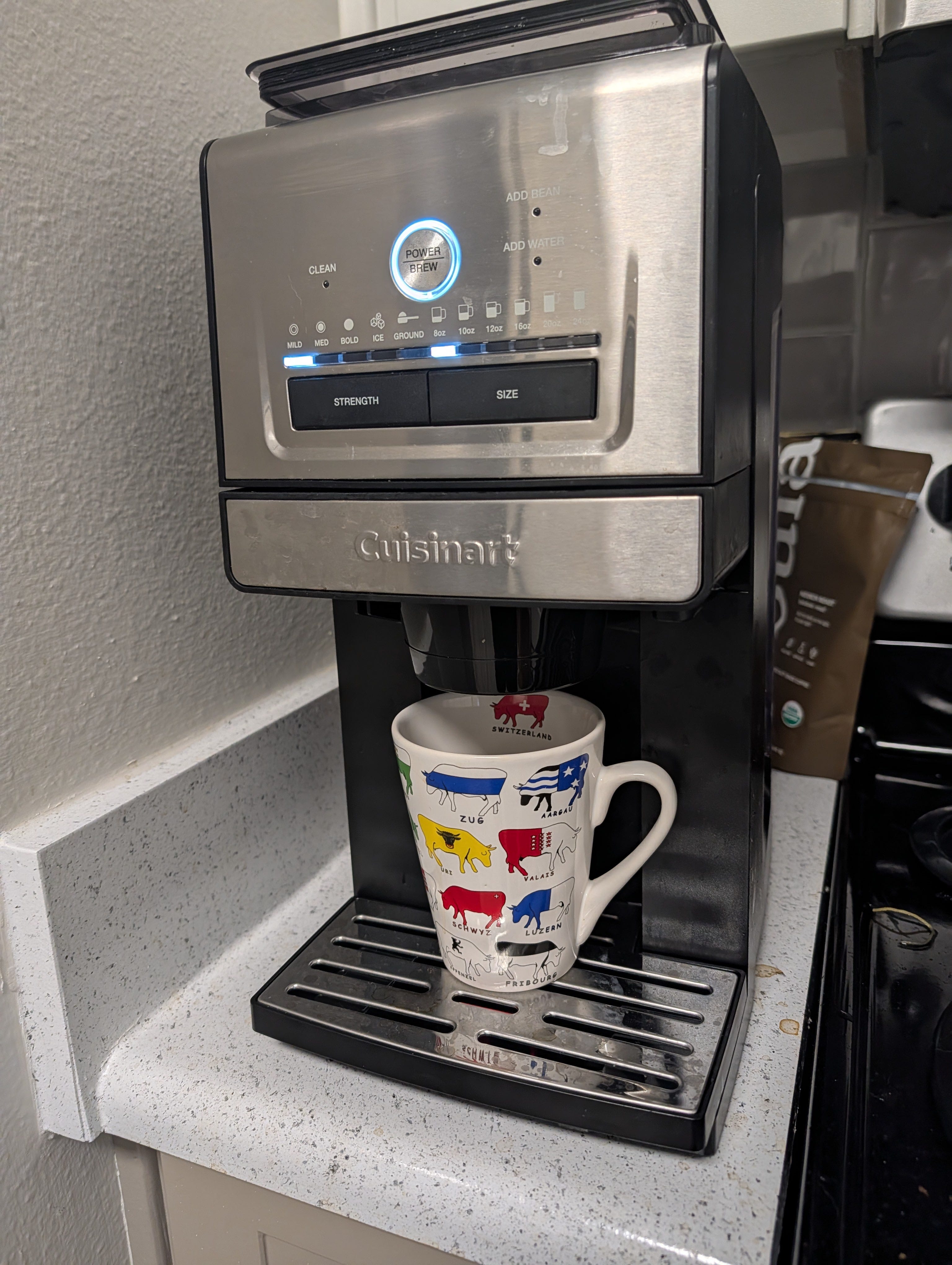
Once the cats are fed, I go to the kitchen to make coffee. The coffee maker someone gifted to me is a fantastic piece of machinery. It grinds my favorite coffee beans and brews the perfect cup of coffee. With a coffee mug in my hand, I shuffle back to bed to watch the morning news on the television.
While watching the news, I check my email, scan a few scientific journals for articles related to Alzheimer’s research, and make notes about what I want to accomplish today. Big Bit is beside me taking a nap. Being a cat would be nice.
I feel good today. Some mornings, I have no energy, no motivation, and an inability to focus. I generally act like a cat and sleep in on those mornings.
My breakfast this morning will be cereal with a handful of blueberries. After eating breakfast, I will get serious and focus on writing.
Before I eat breakfast and prepare for my serious research and writing, I want to share something on my Alzheimer’s mind.
What is the deal with all the Instagram ads touting devices to treat Alzheimer’s symptoms and improve memory? Here are a few questionable products advertised on Instagram:
Memory Air Device - “designed based upon olfactory enrichment concepts which may help reduce the risk of memory loss”; “strengthens long term brain health”; “endorsed by professors, doctors, nurses and people like you” $799 (on sale for $399)
BlueVibe - “Dual 40HZPEMF+Blue Light Therapy for Cognitive Support”; “Based on cutting-edge MIT research”; this wearable device costs $499 (on sale for $349)
Villim ball - “certified medical device for hand tremor reduction”; “advanced AI technology”; “smart algorithms analyze each user’s tremors and personalize therapy in real time”; this handheld ball costs $337.55 (on sale for $270.04)
Before some lawyer calls me and threatens a lawsuit, I am not expressing an opinion on these fine products. They may all do exactly as they claim. I am a skeptic, though.
I understand that people suffering from cognitive issues, persistent tremors, and memory loss can be desperate for a cure. Hell, I am in that group. Please don’t spend hundreds of dollars on a medical product advertised on Instagram, Facebook, or TikTok without talking to your doctor.
It is time for me to eat breakfast. I hope you have a wonderful Friday. Look for the second in my series, Alzheimer’s Disease - Everything You Should Know, later today.
Greg
Hi Greg,
I enjoy your blog. We’ve corresponded before. I'm in early AD too, currently participating in the remternetug trial, Trailrunner ALZ-3, Phase 3. I will be self-administering dose #8 of 18 next week.
I find I am becoming increasingly vulnerable to the online ads for AD prevention, AD progression slowing, AD side effects treatment or any other gimmick that pops up. I think that my participation in the trial actually increases my vulnerability. Through the trial I have had two PET scans, amyloid and tau, as well as numerous rounds of cognitive testing. Of course, I know nothing about what has been learned about my baseline or progression because, as part of the blinding procedure, it is not disclosed to me. Obviously, I am also in the dark on whether I am receiving the placebo or the remternetug. I know this is what I signed up for but I totally underestimated the mental and emotional burden of this lack of knowledge of my own condition. Did you feel this way when you were participating in the trial you were in? I think I am also somewhat more vulnerable to miracle treatments because I am alone. I have no family to support or advise me so the inmate is running the asylum here. As always, I am interested in your thoughts. Your view from the patient perspective is uniquely valuable.
Best regards to you and Linda,
Linda
Completely agree with you about those shady ads! Preying on the vulnerable.