


Hello, friends.
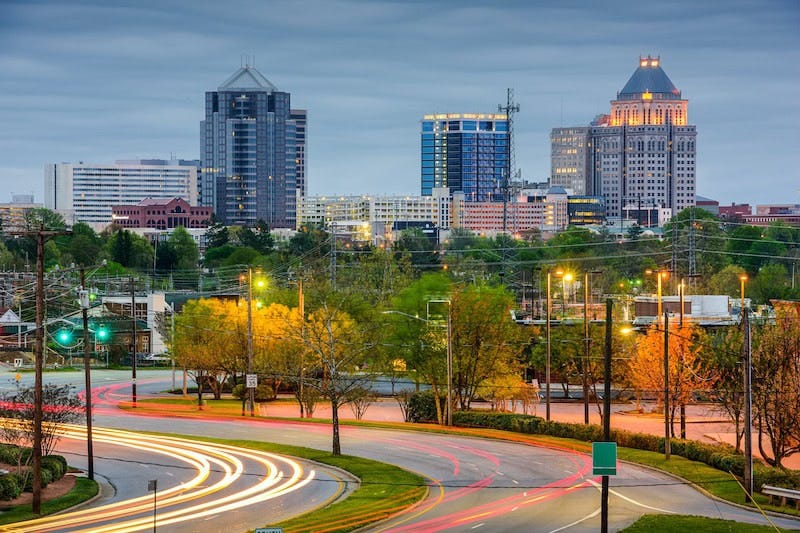
Linda and I are moving 53 miles west to Greensboro. This move is a cost-saving action. Although we love Chapel Hill, the cost of living is very high. We will save $516 per month in rent. Interestingly, our Greensboro apartment has the same amenities and features as our current apartment; yet, the rent is 25% less.
We believe other costs, including groceries and restaurants, will also be lower than in Chapel Hill. Greensboro is a great city. There are many parks with hiking trails. Downtown Greensboro is thriving. The city bus service has a stop less than one half of a mile from our apartment. Grocery stores, restaurants, and other services are near our home.
North Carolina has Amtrak service from Raleigh to Charlotte with many stops along the way. When I have an appointment at Duke Health, I will take the train. The cost is $14 each way, and the ride takes forty-five minutes.
We will move on August 30.
Over the past few months, I have spent countless hours researching housing across North Carolina. I quickly discovered there is an affordable housing shortage not just in North Carolina, but across the United States. The problem goes beyond just affordability. There is a housing shortage. Estimates of the shortage’s size vary; one finding suggests that as of early 2025, 2 million additional housing units were needed to balance supply and demand.1
My housing search included market rate, income-based, and senior subsidized apartment rentals. I found an income-based apartment community in Hendersonville, North Carolina. They have a two-year to three-year waiting list. That is hard for my Alzheimer’s-affected brain to process. How do people wait up to three years for an affordable apartment?
A recent collaborative report from Realtor.com and the National Association of Realtors, the May 2026 Housing Mismatch Report, sheds light on the significant challenges facing the housing market. This report states that the middle class faces the greatest housing shortage. Buyers earning around $75,000, for instance, can typically afford homes priced up to about $261,140. Currently only about 23% of listings nationally fall below this threshold. For a balanced market, 44% of listings need to fall below this threshold. 2
A 2025 report by the National Low Income Housing Coalition (NLIHC) finds a national shortage of 7.1 million affordable and available rental homes for extremely low-income renter households - those with incomes at or below the poverty level or 30% of their area median income, whichever is greater. This results in just 35 affordable and available rental homes for every 100 extremely low-income renter households nationwide.3
I could jump on my soapbox and share my thoughts on why there is an affordable housing crisis. You will be happy to know that I packed my soapbox yesterday in preparation for our upcoming move.

The anxiety and stress of trying to find affordable housing are significant. I certainly felt increased anxiety while searching for an affordable apartment. It is sad that the United States can spend billions of dollars on wars, building Trump monuments, and other questionable projects; yet, millions of Americans struggle to find affordable housing. Oops, I almost unpacked my soapbox with that last sentence.
Not much has changed with my Alzheimer’s progression. I did have an embarrassing situation at a grocery store yesterday. My hands were trembling so much that I struggled to enter my store loyalty card number into the keypad. The cashier was very kind and patient.
Thanks for your continued support.
Greg


Cristian deRitis et al., “Bringing the Housing Shortage Into Sharper Focus,” Moody’s Analytics, July 2025, https://www.urban.org/sites/default/files/2025-07/Bringing-Housing-Shortage-Into-Sharper-Focus.pdf.
https://www.nar.realtor/research-and-statistics/research-reports/housing-mismatch-report
https://nlihc.org/gap