


Hello, friends.
Early this morning, I read an insightful article on LinkedIn about how a United Kingdom-based company called Timeless Presents designs specialized activity products for dementia patients. Their innovative design approach completely flips traditional models on their head: they focus entirely on the experience of the activity itself, without forcing a specific or rigid outcome.
According to their website, Timeless Presents creates dementia-inclusive activity products specifically for care settings, families, and communities - and they even offer free shipping to North America.
The company’s co-founder, Sharon Daltrey, beautifully summarizes their philosophy:
“We make resources families and carers can pick up and use. The guidance that comes with our products is part of the resource. Our approach helps to slow down an interaction, offer an activity, and pay attention to what might matter. An activity can offer a way to begin without putting the person on the spot. It can make room for curiosity, touch, recognition, or shared attention.”
Because their products are built to invite different levels of response and participation based on an individual’s needs at any given moment, the goal is simple. As Ms. Daltrey notes, “The point is to meet the person where they are and pay attention to what happens.” 1
Designed for Real Accessibility
All of their products are intuitive and exceptionally user-friendly. By utilizing high-contrasting colors, they significantly enhance visual accessibility. Furthermore, the layouts ensure the activities remain fully visible within a reduced visual field, accommodating individuals who struggle with limited peripheral vision.
Beyond being reliable and effective, the company emphasizes sustainability by using environmentally friendly materials. While their primary UK storefront offers a sprawling catalog of interactive blocks, coloring books, and puzzles, the North American site currently features a curated selection of three items
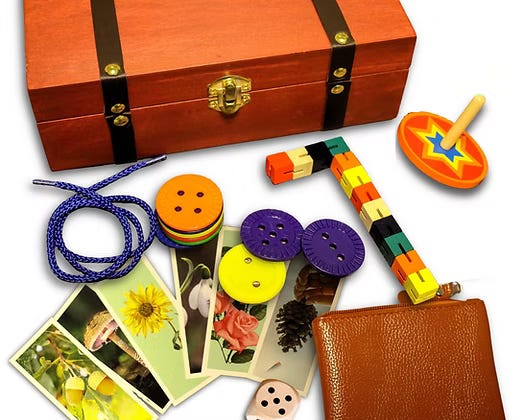
Among those available to North American buyers is the Curiosity Box, which retails for $53.49 USD. The site describes it as:
“...a dementia-inclusive activity box, carefully designed for late-stage dementia care. It isn’t just a box of objects — it’s a selection of tactile items, nostalgic images and sensory prompts that support meaningful connection without pressure.”
It is no surprise that Timeless Presents has earned numerous awards for these thoughtfully designed tools. (Note: I am not affiliated with Timeless Presents, nor am I being compensated for writing this review or for any products sold as a result of it.)
A Shift in Focus: From Modern Infrastructure to Historical Value
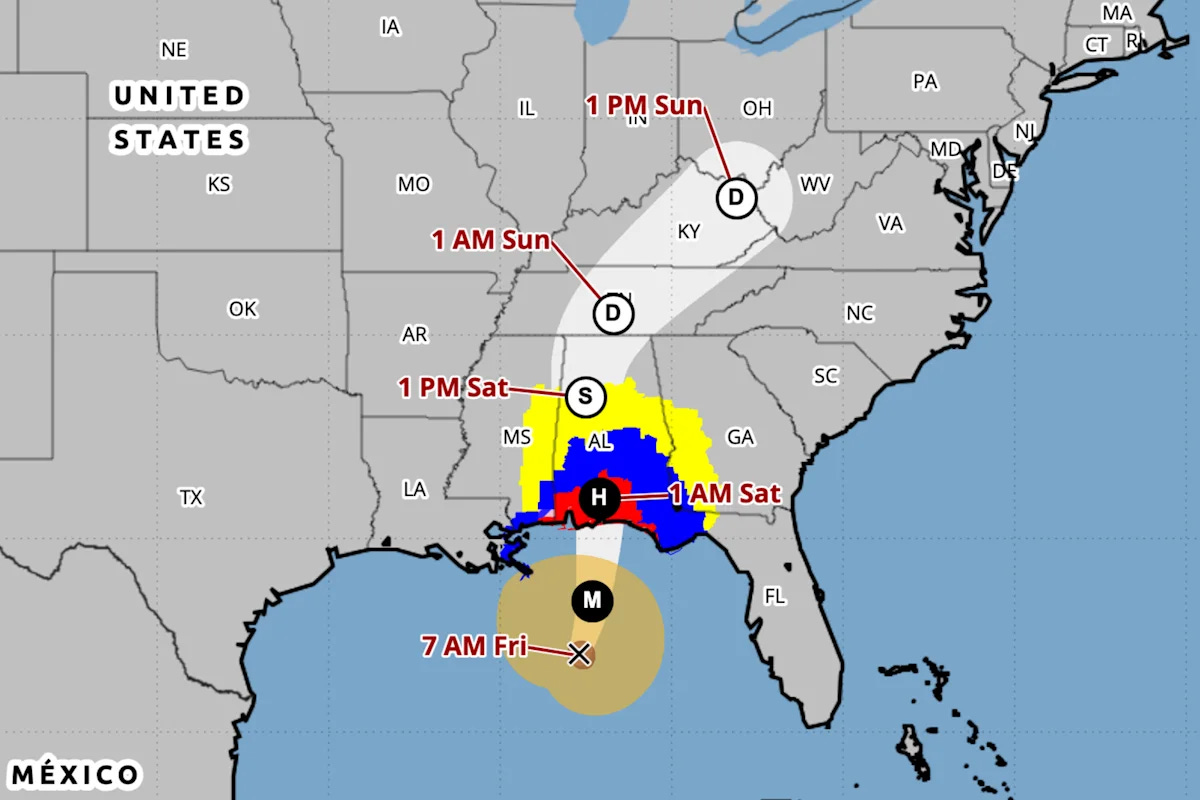
Before moving on, a quick safety note: it looks like Hurricane Isaias is projected to make landfall along the United States Gulf Coast between Mississippi and Florida. If you live anywhere in the storm’s path, please take immediate precautions and stay safe.
With that on my mind, I leave you to ponder a bit of American history. On this exact day in 1888, the Washington Monument - originally designed by architect Robert Mills -officially opened to the public.

Constructed from more than 36,000 individual blocks of white marble and granite, it remains the world’s tallest stone structure and tallest obelisk. Remarkably, it stands held together entirely by gravity and friction—not a single ounce of mortar was used during its construction.
The total historical cost to build the monument was $1,187,710 in 19th-century currency. Factoring in the historical Consumer Price Index (CPI)—which shows average prices have risen by roughly 3,318% since its completion in 1884 - that equals approximately $40.6 million in 2026 dollars.
Of course, duplicating the Washington Monument today would cost exponentially more due to modern labor laws and strict structural safety standards. However, looking at contemporary spending priorities puts those numbers into a stark perspective.
Prioritizing Public Dollars
For comparison, current estimates for the Trump administration’s proposed 250-foot monument near Arlington National Cemetery - often dubbed the “Great Triumphal Arch” or “Arc de Trump” - project construction costs to reach anywhere from $100 million to $250 million. While the Washington Monument towers at 555 feet, this proposed arch would be 250 feet tall - making it 305 feet shorter, yet vastly more expensive.
My amateur, back-of-the-napkin math makes me question why a single structural arch requires a quarter of a billion dollars. The reason I am so deeply tracking the progress of the Great Triumphal Arch is simple: I am looking closely at where our federal tax dollars are funneled.
Imagine if we pivoted. What if the best solution is to skip building the arch entirely, and instead route that $250 million directly into Alzheimer’s and dementia research? Could those funds be the key to unlocking a cure? 2
What do you think?
Have a wonderful weekend, and please stay safe if Isaias is heading your way.
https://healthcarematters.uk/timeless-presents-designed-with-connection-in-mind
https://www.latimes.com/world-nation/story/2026-09-05/ali-trumps-vanity-arch-is-coming-its-no-triumph