



I have selected five exciting research projects and clinical trials to discuss with you over the next week. These projects have the potential to be game changers in Alzheimer’s treatment.
The five companies and their projects are:
LifeArc - This London-based not for profit organization is leading the way in developing a finger-prick blood test to measure Alzheimer’s biomarkers.
Alecto Therapeutics - In the preclinical trial stage is AL137 - ABD, a drug designed to remove amyloid plaques, with the potential to reduce the risk of amyloid-related imaging abnormalities (ARIA) and enable subcutaneous delivery. Alecto is based in San Francisco.
Alnylam Pharmaceuticals- Currently in Phase One clinical trials, Mivelsiran is an intrathecally administered RNAi therapeutic targeting amyloid precursor protein (APP). Alnylam is based in Cambridge, Massachusetts
Arrowhead Pharmaceuticals - Based in Pasadena, California, Arrowhead has an RNA interference therapeutic being developed that utilizes a “new proprietary delivery system” that achieves better blood-brain-barrier penetration.
Biogen - Another Cambridge company, Biogen is no stranger to Alzheimer’s therapies, having developed Lecanemab in collaboration with Eisai Co., Ltd. Currently in Phase Two trials, Biogen’s BIIB080 is an antisense oligonucleotide (ASO) that may reduce production of the tau protein and its accumulation in brain cells.
Buckle up as I take a deep dive into these five developments. I will start with LifeArc tomorrow.
Recently, I wrote about sundowning. Someone asked if sundowning is related to crepuscular depression. Based on my research, while sundowning and crepuscular depression are both phenomena that involve worsening mood or behavior as the day ends, they are actually very different.
Crepuscular depression is sometimes called evening depression. It is linked to disrupted circadian rhythms, where the body's internal clock misaligns with the natural light-dark cycle.
Crepuscular depression is more of an emotional behavior where sundowning is cognitively driven. There is an overlap in symptoms. Since many dementia patients suffer from depression, it is easy to confuse the two behaviors.
Finally, I had my eighth Lecanemab infusion today. I think I am finally recognizing the infusion process as a familiar routine. Not a fun or exciting routine, though.
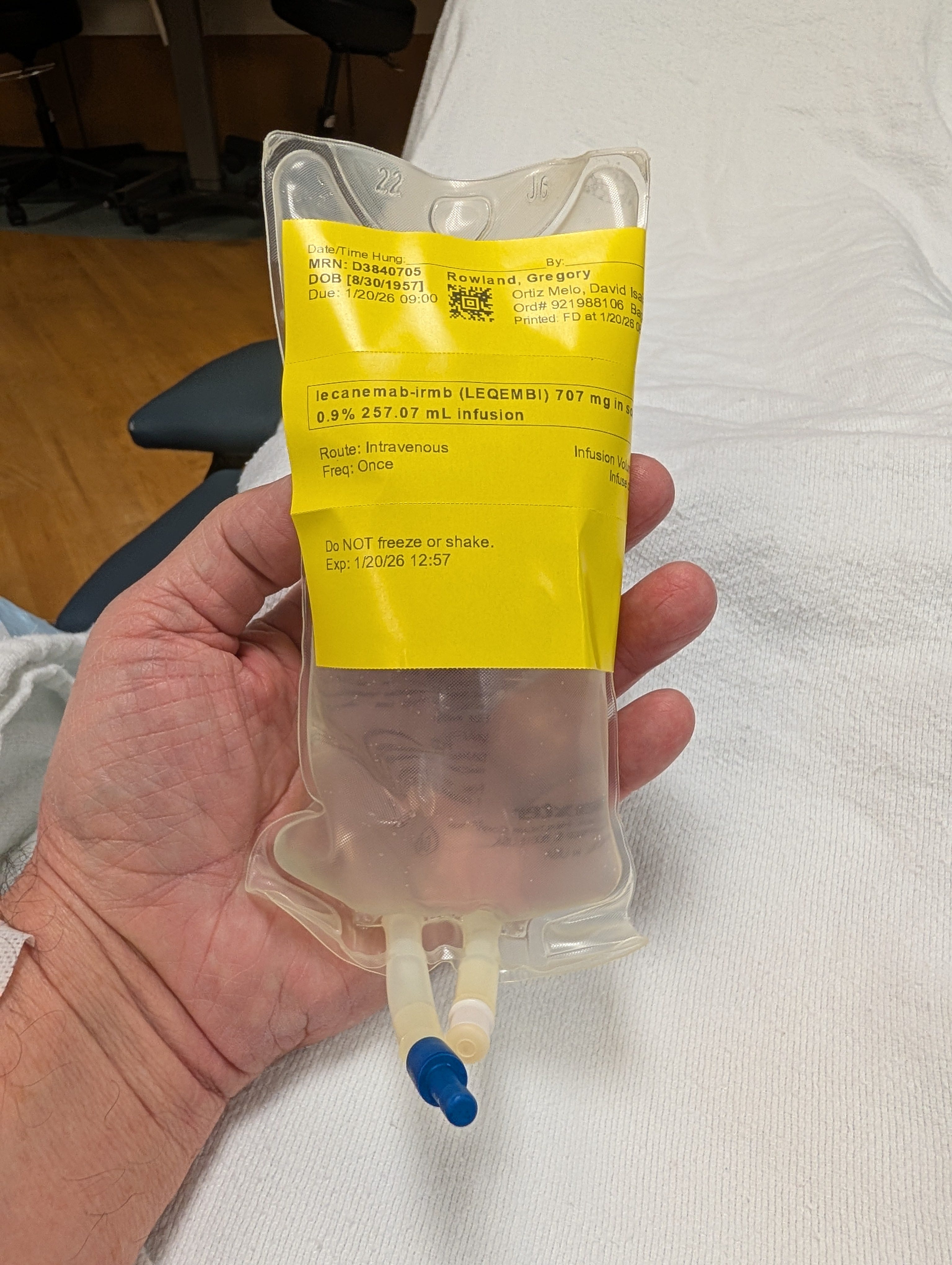
Thank you for your continued support. It means the world to me.
I was thinking more about the fact that severity of PMS in younger years is related to more severe menopausal symptoms later in life and so I was wondering if my crepuscular depression (which literally only gets me between 5pm and 7pm ) might make me more likely to have sundowning if I eventually get alzheimers. That was the link I was making I perhaps didn’t explain it very well. This could be useful in a predictive sense for people to plan strategies to self manage it or for carers to help manage it. For example one lady I follow on Instagram takes her husband out for drives in the car with good music on the radio because he’s happy in the car and he loves music. She’s not specifically using it for sundowning but it could be helpful for someone to try?