


A few days ago, the VIB-KU Leuven Center for Neuroscience released a report about a significant discovery that I believe will guide future Alzheimer’s treatment research. A group of VIB-KU Leuven researchers have unmasked the mystery of how Lecanemab reduces the buildup of toxic amyloid plaques in the brain.

Study authors Dr. Giulia Albertini, Prof. Bart De Strooper, and Magdalena Zielonka. Credit: VIB
At the center of their discovery is a specific part of the monoclonal antibody known as the ‘Fc fragment.’
As a review, Lecanemab is an FDA-approved intravenous monoclonal antibody for early Alzheimer’s disease that targets and reduces amyloid-beta protofibrils and plaques in the brain. Our brains have microglia cells that regulate brain development, maintenance of neuronal networks, and injury repair. Microglia should naturally remove amyloid plaques. When they are unable to remove them effectively, Alzheimer’s disease forms. Recent research has focused on how to restore the natural function of microglia.
The Alzheimer’s research community has long debated how exactly the Lecanemab antibody clears toxic protein deposits, known as amyloid plaque. Understanding how the antibody works is important as future therapies are considered.
Let’s take a look at the parts of an antibody in simple, layperson terms. Using a lobster analogy, there are two main parts to an antibody. The head and claws of the antibody are the antigen binding fragment (Fab). The crystallizable fragment (Fc) is the tail. The Fab region binds to a specific target. In Lecanemab it binds to amyloid plaques. The Fc fragment interacts with the immune system, or the microglia cells.
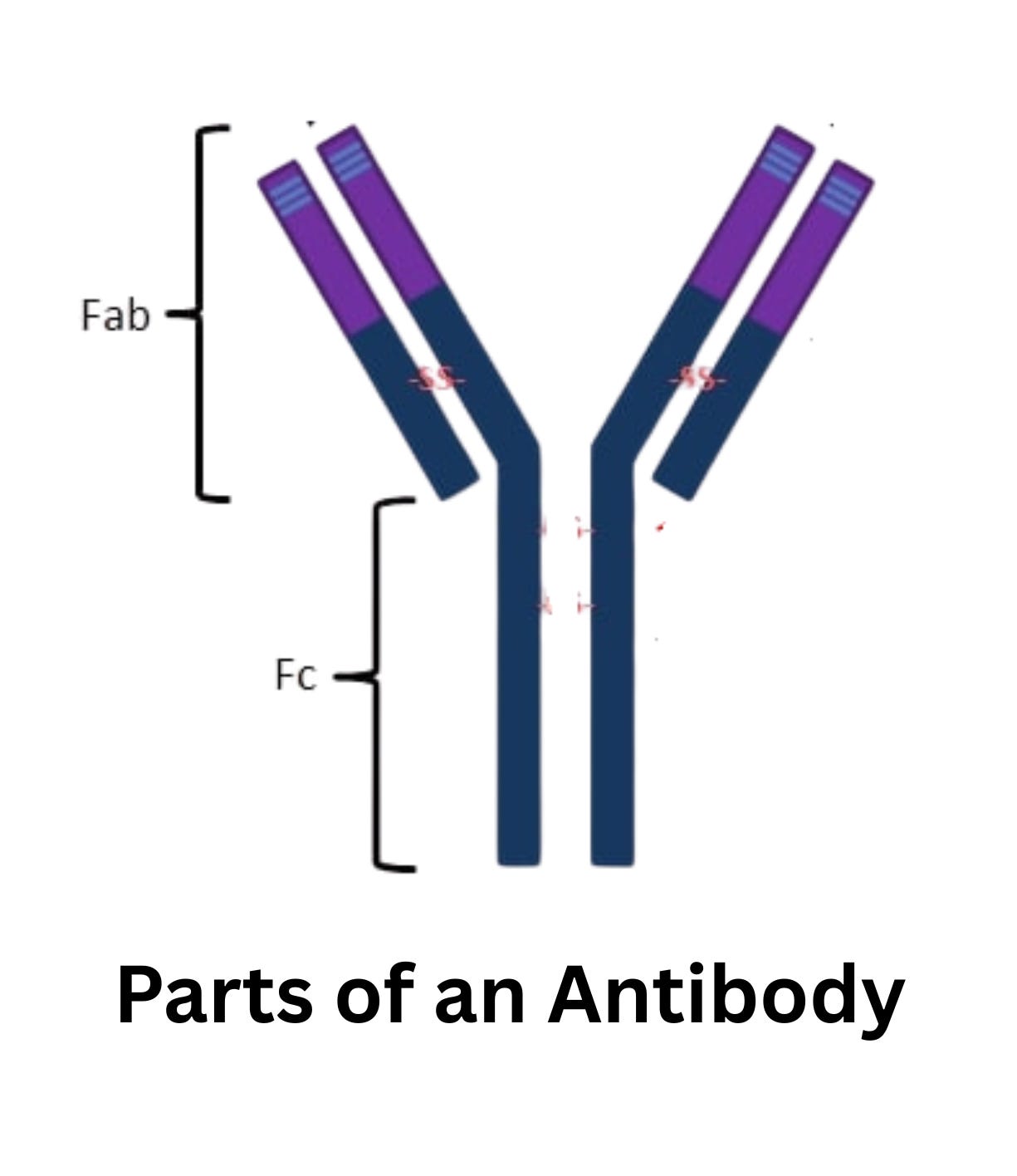
Some researchers believe that the Fc fragment is not required to remove amyloid plaque. Yet, the VIB-KU Leuven research scientists discovered the Fc fragment is crucial for activating microglia and triggering the natural processes required to remove or prevent plaques. The team led by Prof. Bart De Strooper demonstrated that the Fc fragment is indispensable. Microglia responded to the antibody only when this segment was intact and functional, confirming that immune activation through the Fc region is central to Lecanemab’s effect.
This is the first clear explanation for how Lecanemab achieves its effects.
The VIB-KU Leuven research scientists used a mouse implanted with human microglial cells. The mouse also had Alzheimer’s disease. This allowed the researchers to examine how Lecanemab activates human microglial cells. Further testing of an antibody without the Fc fragment had no effect on the microglial cells.
“The fact that we used human microglia within a controlled experimental model was a major strength of our study. This allowed us to test the very antibodies used in patients and observe human-specific responses with unprecedented resolution,” adds Magdalena Zielonka, co-first author of the study.
The researchers went a step further and learned how microglia clean the amyloid plaques after the mouse was given Lecanemab. Once the process was identified, they used an antibody without the Fc fragment and realized that critical cellular processes required to clear amyloid plaque were not triggered.
“This opens doors to future therapies that may activate microglia without requiring antibodies. Understanding the importance of the Fc fragment helps guide the design of next-generation Alzheimer’s drugs,” concludes Prof. Bart De Strooper.
REFERENCES:
Scientists Uncover the Hidden Mechanism Behind FDA-Approved Alzheimer’s Drug
Microglia Function in the Central Nervous System During Health and Neurodegeneration
Thank you for your continued support. I will receive my eleventh Lecanemab infusion tomorrow morning.