


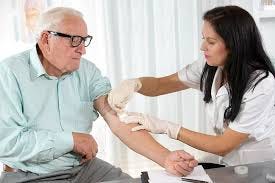
I often see advertising for at home dementia testing and coaching provided by BetterBrain.com. After reviewing their website, a number of questions popped into my Alzheimer’s brain. Before digging deeper into BetterBrain.com, I searched for similar direct-to-consumer testing companies. I found four companies that seem to be the leaders in direct-to-consumer Alzheimer’s testing:
Function Health
Neurogen Biomarking
Apollo Health BrainScan
BetterBrain.com
Each company offers a variety of testing packages. In a few cases, coaching or consultations are also offered. The common thread running through all four companies is you do not need to involve your doctor to take their Alzheimer’s disease test. The companies avoid offering a definitive Alzheimer’s disease diagnosis, but rather tell the consumer their risk for getting the disease.
Until blood tests for Alzheimer’s disease became available in 2025, there was no way to test for Alzheimer’s disease except with a PET scan or a spinal tap to study cerebrospinal fluid. Typically, those tests are not ordered until a neurologist has given the patient a complete cognitive test, lab tests, and maybe an MRI.
I am a huge advocate for early testing and diagnosis of Alzheimer’s disease. At the same time, it feels like smart entrepreneurs see an opportunity with biomarker blood tests. I am concerned that direct-to-consumer Alzheimer’s testing via a website may lead people into either false security or incorrect diagnosis of Alzheimer’s disease.
When the FDA approved the P-tau217 blood-based biomarker test in 2025, it stated, “False positive results, in conjunction with other clinical information, could lead to an inappropriate diagnosis of, and unnecessary treatment for, Alzheimer’s disease. This could lead to psychological distress, delay in receiving a correct diagnosis as well as expense and the risk for side effects from unnecessary treatment. False negative results could result in additional unnecessary diagnostic tests and potential delay in effective treatment. Importantly, the Lumipulse G pTau217/ß-Amyloid 1-42 Plasma Ratio is not intended as a screening or stand-alone diagnostic test and other clinical evaluations or additional tests should be used for determining treatment options.”
The direct-to-consumer Alzheimer’s testing companies all have a website that makes bold claims. My favorite is,“blood tests to detect cognitive decline years before symptoms appear, offering a gentle alternative to spinal taps and costly PET scans."
Each company is combining expert marketing, consumer psychology principles, creative advertising, and the latest web technology to sell direct-to-consumer Alzheimer’s testing to anyone willing to pay. There is one company that pushes insurance coverage for their tests and counseling.
I have four primary concerns on the at-home tests:
accuracy
results may cause unnecessary stress and anxiety
no direct physician involvement
legitimacy of the company
Over the next two weeks, I plan to request an interview with each of four companies I have listed. I will write an article about each company detailing their services, their testing process, their counseling and coaching services, their testing costs, and their ownership.
What do you think? Please leave a comment.
I'm looking forward to your reports on the direct-to-consumer companies. I took my P-tau test through a clinical trial that was testing blood samples for a number of factors so no physician was involved in my situation. They called and told me that I was at extremely high risk for AD, thank you, your payment is in the mail, good-bye. I was left sitting there slack jawed. I live alone so I had no one to talk to or share my devastation with. I think this is a huge risk with the DTC companies and really has to be avoided. When people are asked about their greatest fear in aging AD is always at or near the top of the list. When someone has their greatest fear in life confirmed some kind of emotional support needs to be in place. Let's not let AD testing turn into the Wild West, anything-goes marketplace that Glp-1 has become.
For me, after receiving my results, I went into a complete mental and emotional shutdown for a couple months. Since this was just experimental after all, why get all worked up? Then one day, I was driving along listening to NPR and they announced that the P-tau blood serum test had been approved by the FDA for use by the general public. I had to pull over and give some thought to what that meant for me and my 6.5x normal P-tau levels. That was when I joined a clinical trial for an AD medication.
So glad that you are sharing your journey and that I recently found your Substack.