


The Keck School of Medicine of the University of Southern California has announced a new grant from the National Institutes of Health (NIH). This $12.6 million award brings the total investment in the Artificial Intelligence For Alzheimer’s Disease (AI4AD) project to $30.7 million.
This multi-institutional project will develop artificial intelligence (AI) tools to:
uncover the biological causes of Alzheimer’s and related dementias
improve the understanding of disease progression
develop more precise treatment options
Led by Paul M. Thompson, PhD, associate director of the USC Mark and Mary Stevens Neuroimaging and Informatics Institute (Stevens INI) at the Keck School of Medicine, AI4AD brings together 10 investigators and 23 co-investigators from 10 institutions. This project builds on the original AI4AD initiative launched in 2020, which developed AI tools to detect Alzheimer’s-related patterns in brain scans and showed how machine learning can link imaging findings to underlying genetic risk.
I am excited that the primary goal of this project is to create subtypes of AD and related dementias. Using AI, specific categories based on brain scans, neuropathology, and genetic data will be created. These subtypes will benefit scientists as they attempt to match treatments to patients best suited for that specific treatment. There are many variables with AD and the ability to target new therapies to a specific variability should result in improved treatment efficacy.
Another goal of AI4AD involves teaching AI to search large genetic datasets to identify combinations of DNA changes associated with AD, disease progression, and key biomarkers. With over 58,000 participants, AI can effectively identify combinations much faster than traditional research methods. The goal is to uncover new genetic and protein-related changes that may help drive neurodegeneration, and to link them to measurable changes in the brain and behavior.
The third goal of AI4AD is making sure AI tools work well across global populations. Current biomedical datasets lean heavily toward people of European ancestry. AI4AD will adapt the AI tools for African, Indian, Korean, and US populations.
The final goal of AI4AD is discovering treatments using an approach known as genome-guided drug discovery. Primarily, the project will look at existing drugs to see if they can be repurposed for patients with specific Alzheimer’s-related biological profiles.
A project schedule has not been released.
In my opinion, AI4AD will benefit every current scientific research project and all future discoveries by providing vast amounts of organized data that is not readily available today.
Since today is Friday, I feel compelled to provide a bit of interesting information about today in history and this weekend. It is a My Alzheimer’s Journey tradition!
Easter traditions vary across cultures.
In New Zealand and Australia, Easter falls during autumn, and many people enjoy eating hot cross buns — spiced sweet bread marked with a cross. Rather than celebrate the Easter rabbit, they celebrate an endangered Australian animal called a bilby.

In Ethiopia, Christian churches celebrate Fasika, the 55 days leading up to Easter. Fasika is actually a bigger deal to people than Christmas! During this holiday celebration, people spend 55 days fasting from meat and animal products.
In South Africa, the day after Easter is known as Family Day, designed to provide a chance for loved ones to gather and reflect on the holiday’s meaning.
In the Philippines, Easter morning begins with two separate processions — the men are in one procession and follow an image of Jesus risen from the dead while the women make up another procession and follow an image of Jesus’ mother, Mary, who’s wearing a black veil.
In Germany, families decorate Easter trees with painted eggs, much like Christmas trees in December.


In Poland, families gather for Easter Sunday breakfast, which often includes sweet bread called babka.
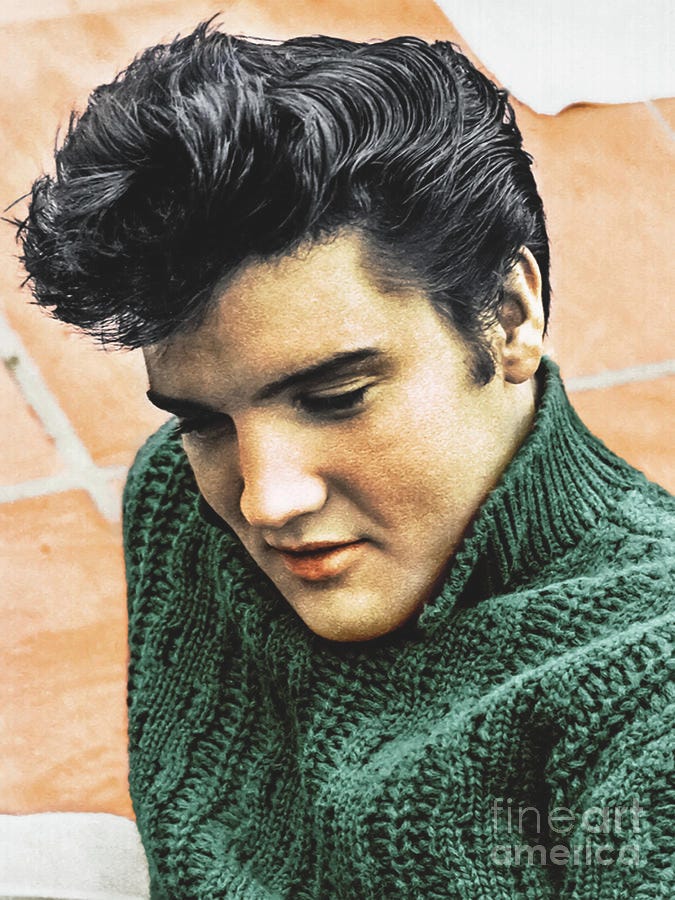
On this day in 1960, Elvis Presley recorded ‘It's Now Or Never’, ‘Fever’ and ‘Are You Lonesome Tonight’ at RCA studios in Nashville, Tennessee.
In closing, Linda and I send strength and resilience to the thousands of the United States military families who have a loved one serving in the Iran War. Sadly, the casualties from all involved countries continue to mount. As Benjamin Franklin said in 1783, “There never was a good war or a bad peace.”
My Alzheimer’s Journey is a reader and subscriber funded blog. We do not solicit paid subscriptions. Instead, donations are greatly appreciated. Thank you.
Thanks for sharing this news! We often hear that X has been proven to be good for brain health, or Y has been proven to be good for brain health... or wait, now X doesn't seem good for brain health.
I think part of the reason for all the variation in findings is that there are so many different causes of dementia, or flavors of Alzheimer's. So what hurts one person might not hurt another, depending on their unique genetic makeup or environment.
Said another way, my secret hope is that somehow scientists learn that cheese isn't bad for all of us... maybe it's just some of us... and I'm not part of that group. :)