


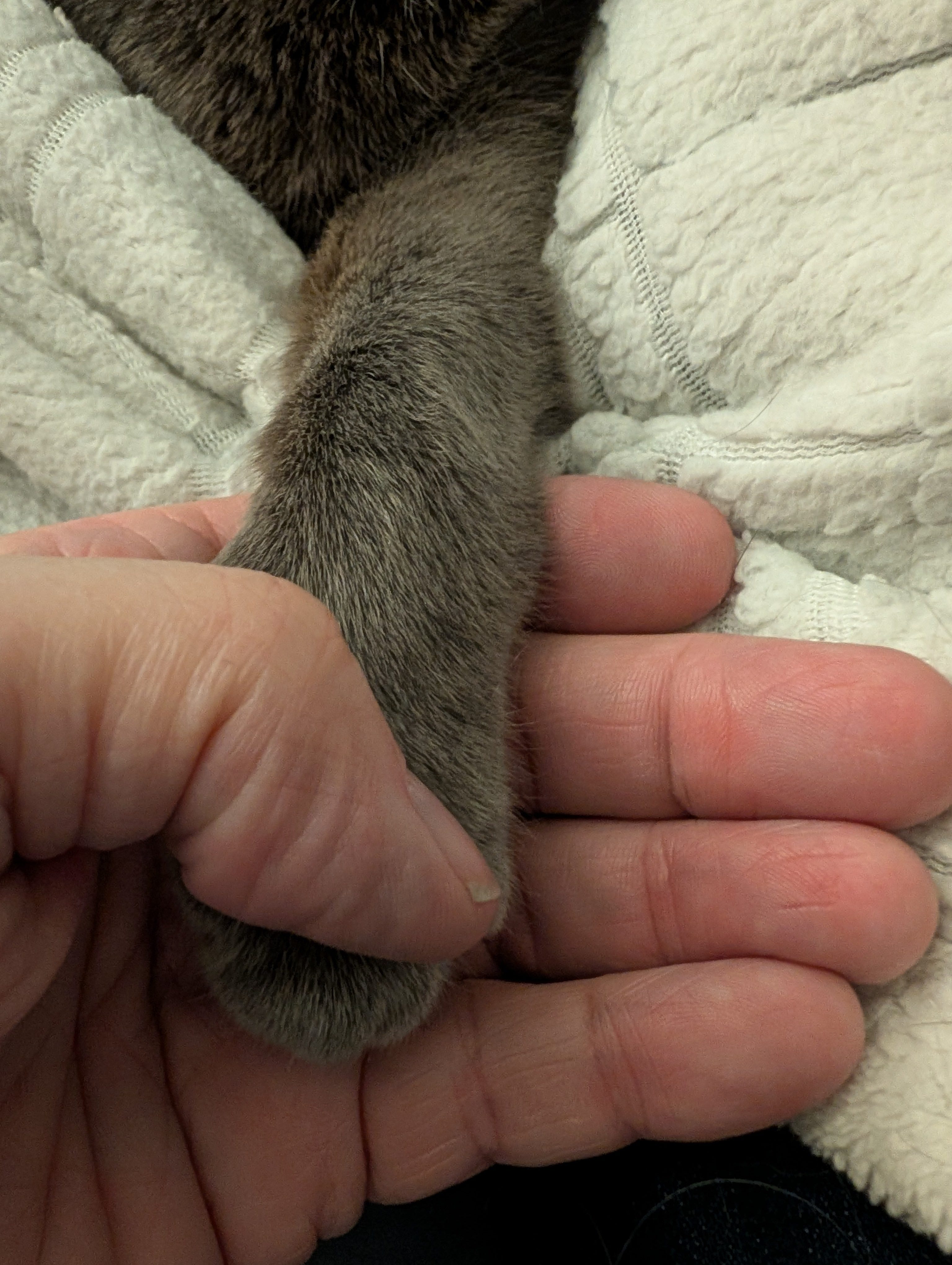
Last night, we were laying in bed watching television. Big Bit was in her usual spot on my lap. Suddenly, she extended her left front leg and placed her paw in my hand.
I had just finished a telephone call regarding selling some of our closed business equipment. I felt anxious and somewhat worried.
Not to mention, I felt my usual fogginess and tiredness.
Big Bit's paw in my hand put me at ease. It seemed like she sensed my anxiousness.
At about four o'clock this morning, when I could not sleep, Big Bit was snuggled against me. I had been reading off and on. Mostly, thinking though. I was sad as I thought about my Alzheimer's disease and how it turned our lives upside down.
Big Bit rolled over and stretched. I started petting her back and sides. She has very soft fur. I felt a sense of calm as I petted her.
I started thinking about the calming effect of touching a pet. Or, a pet touching its human companion.
Over the years, I have had many pets (including two miniature donkeys). I remember how therapeutic it was to brush and pet the donkeys. During some of my deepest depressed periods, I would come home after work and spend time petting the donkeys. They had no idea how much they helped me. Or, maybe they did know.
As my Alzheimer's progresses, I hope I can continue to have cats with me. The calming effect of their touch is so important to my well-being and my happiness.
Do you have pets? If so, are they a part of the life of your loved one suffering from Alzheimer's disease?
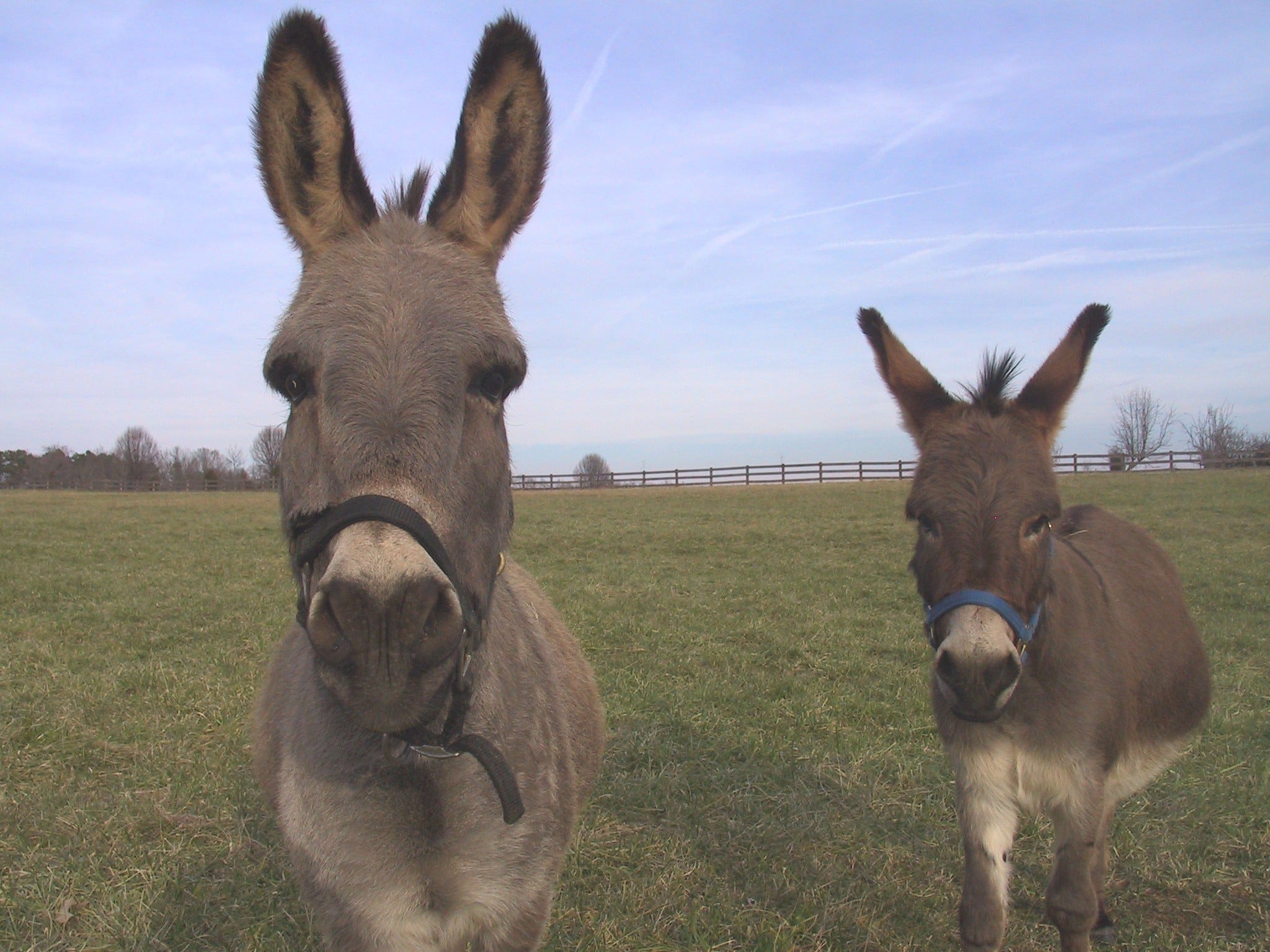
This is Junior and Reno, the miniature donkeys I had many years ago.
I think animals are a big part of a healthy routine. I see my grandmother feel needed and understood by our 3 cats :’)
This was quietly powerful. What you described with Big Bit placing her paw in your hand is the human–animal bond doing what it does best: offering co-regulation when words (and even thoughts) feel heavy. In clinic we often talk about “non-pharmacologic interventions” for anxiety, insomnia, and agitation in dementia, but pet touch is one of the most biologically plausible ones: slow, rhythmic tactile input can downshift sympathetic tone, soften hypervigilance, and act as a kind of external anchor when the internal landscape feels foggy.
For families reading: when it’s safe and feasible, simple rituals like brushing, gentle petting, or sitting together with a calm animal can be a meaningful “dose” of comfort. (And as always, worth balancing with practical safety; fall risk, scratches, caregiver bandwidth.)
Thank you for naming something many people feel but rarely validate: sometimes the best medicine is a warm, steady presence that helps the body remember it’s okay!