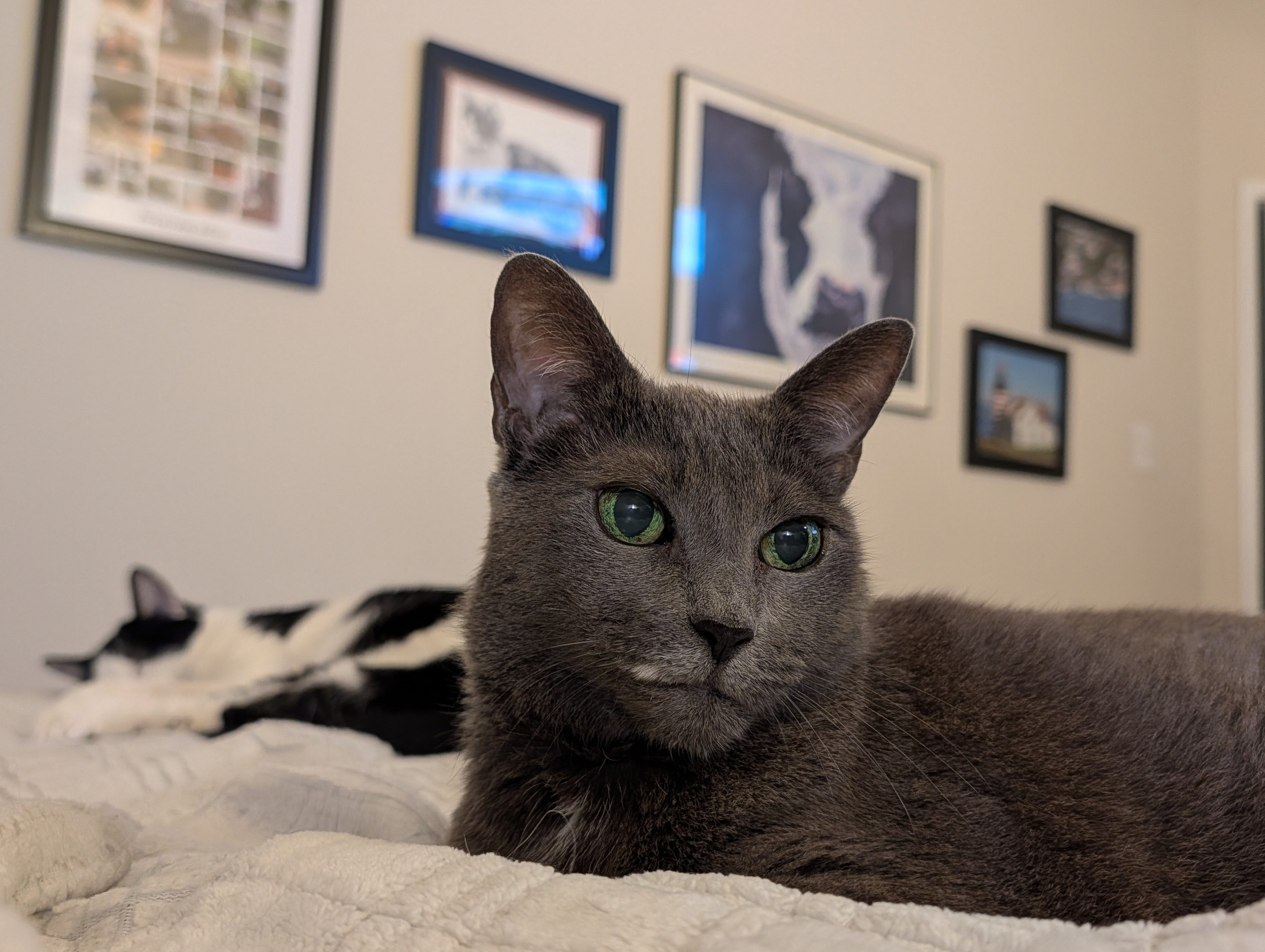
While two of our three cats are enjoying a rainy morning, I am busy researching a promising novel drug being developed by the Belgian biotech company reMYND.
This drug is specifically designed to counteract the pathological calcium leak and overload caused by tau and amyloid buildup.
Even if anti-amyloid antibodies like lecanemab and donanemab successfully remove physical plaques from the outside of brain cells, a critical question remains: What happens to the internal, structurally broken neurons left behind in their wake?
A groundbreaking shift in Alzheimer’s therapeutics focuses on the catastrophic internal calcium leaks that continue to destroy brain cells even after plaques are cleared.
In today’s research report, I look closely at reMYND’s REM392—a novel “molecular glue” heading into Phase 1b patient trials in early 2027. Funded by the Alzheimer’s Drug Discovery Foundation (ADDF), this treatment aims to repair the cellular scaffolding (septin filaments) from the inside out, plugging the toxic calcium leaks that drive tau tangles and memory loss.
The report will be published later today. Until September 30, there is no paywall.
Please consider a donation to the GoFundMe campaign for our sustainability plan. Even a few dollars will kickstart the campaign. Thank you.